Are We Really Moving Forward?
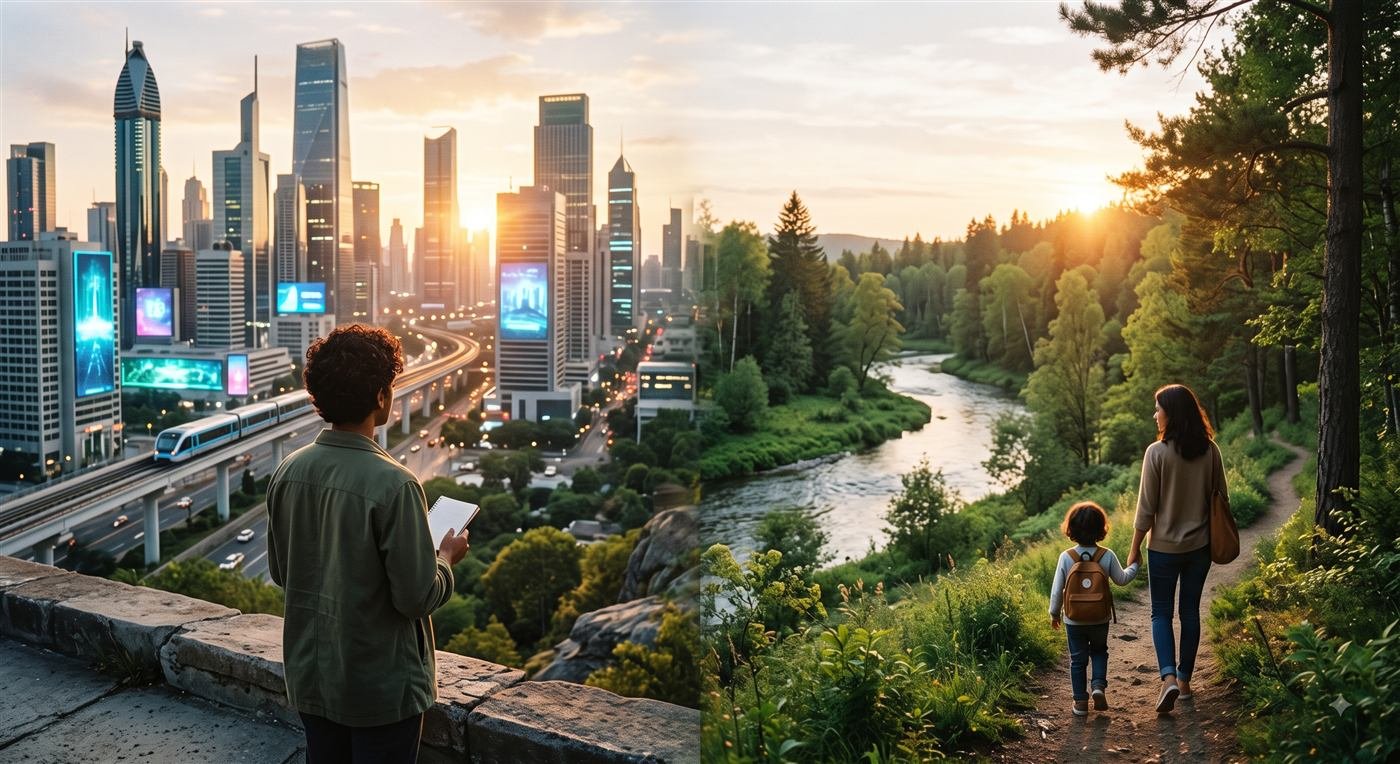
These days, we are witnessing a new form of technological unemployment, raising one of the biggest concerns of our time: survival. For some, this may feel like a positive reset or an opportunity to rethink life. But for many others, it is creating uncertainty, stress, and difficulties that they are simply not prepared to handle.
As someone working in software and continuing to learn through education, I see how rapidly technology is advancing. We are moving faster than ever, creating new solutions, improving productivity, and driving economic growth. But it makes me wonder: at what cost? And is all of this growth really worth it?
We are becoming very good at solving immediate problems. Technology gives us faster, smarter, and more convenient solutions. But perhaps we should also pause and ask ourselves: do we really need every solution we are capable of creating? And are we prepared to deal with the consequences that come with them?
Technology and rapid development have already begun to disrupt employment, economies, and the way people survive and build their lives. Yet, most of the time, we look at these changes only from an individual perspective—How will I survive? How will I protect my career? How will I adapt?
But there is another question we rarely ask:
What are we leaving behind for the next generation?
We are creating enormous differences in wealth and economic opportunities. We are consuming natural resources to support development and growth, often focusing on what we need today without giving enough thought to how those resources will be preserved for tomorrow.
At the same time, we are experiencing natural calamities and environmental changes with increasing concern. We continue to search for solutions by asking “What happened?” and “How can we fix it?”
But perhaps we need to ask a deeper question:
Why is this happening in the first place?
Understanding the why may be more important than continuously developing solutions for the consequences of our actions. If we genuinely study the reasons behind these problems, perhaps we can rethink the direction of growth itself rather than simply finding faster ways to manage the damage.
I consider myself privileged to have a loving family, a good environment, and many of the things that make life meaningful. But that privilege also makes me question our responsibility.
Are we doing enough to preserve the quality of life and environment that we have been fortunate to experience?
Growth is important. Technology is important. Progress is important.
But progress should not only be measured by how quickly we can move forward. Perhaps it should also be measured by what we preserve, what we protect, and what we leave behind for those who come after us.
The real question may not be whether technology is good or bad.
The question is:
Can we create a future where technological progress, economic growth, human well-being, and nature can exist together—and still leave future generations with a life worth living?